
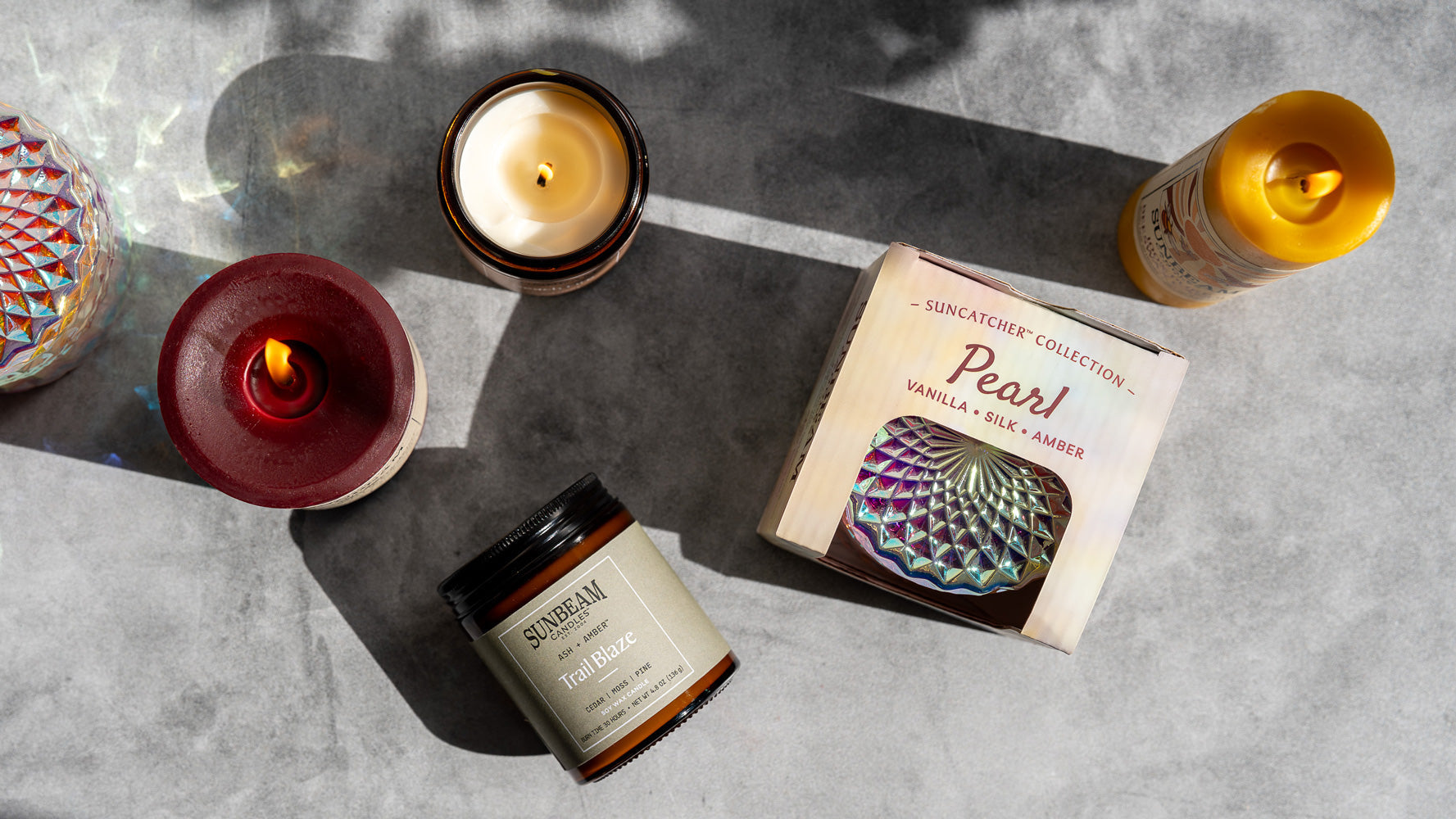
Healthier home, happier flame: choosing clean-burning candles
Air conditioning is humming, windows are closed, and the cozy glow of a candle can make home feel calm and grounded. In peak AC season, indoor air quality matters more than ever. The good news, a few ingredient checks and simple burn habits can help your candles burn cleaner and feel better in tight, climate-controlled spaces.
At Sunbeam Candles, we believe in ingredient transparency and right-sized scent. Below, you will find what to look for, what to avoid, and how to burn for a healthier flame, plus gentle options for sensitive noses.

What makes a candle burn cleaner
Cleaner burning is mostly about four things, wax, wick, color, and fragrance source. Proper use makes a big difference too.
-
Wax type: Natural waxes typically burn cleaner with lower soot when properly wicked. Top choices include:
-
100% beeswax, naturally honey-scented and slow burning.
-
Plant-based soy and balanced soy blends.
-
Apricot-coconut-soy blends that melt evenly and hold delicate natural fragrance.
-
Wick: Choose 100% cotton wicks with no metal cores. A cotton wick, trimmed to about 1/4 inch before each burn, helps prevent excess smoke and carbon mushrooming.
-
Color: Natural golden beeswax needs no dye. When color is desired, look for eco-minded dyes used sparingly and avoid unknown pigment additives.
-
Fragrance: If you enjoy scent, reach for pure essential oils in beeswax pillars or natural botanical fragrance in plant-based container candles. Keep intensity modest in small or unventilated rooms.
-
Ventilation and burn care: Trim the wick, avoid drafts, and crack a window briefly if you can. Let the first burn create a full melt pool to help reduce tunneling.
Health-first answers to common questions
-
What is the healthiest candle to burn in your house? A well-made candle using 100% beeswax or a high-quality plant-based wax, paired with a 100% cotton wick and no metal core, is typically the healthiest choice. Unscented beeswax is a great default, especially for dining or scent-sensitive homes.
-
Which candles are safe for lungs? No open flame is entirely emission-free, but low-soot options like pure beeswax or carefully formulated plant-based waxes with cotton wicks are often easier on indoor air. Keep wicks trimmed, limit burn time in very small rooms, and ventilate lightly.
-
What is the healthiest wax for candles? 100% beeswax is a strong pick for a steady, low-soot burn with a naturally subtle honey aroma. High-quality soy or apricot-coconut-soy blends can also burn clean when properly wicked.
-
What are the worst candles to burn? Avoid candles with petroleum, unknown additives, metal-core wicks, heavily perfumed synthetic scents in tight spaces, or poor-quality blends that soot and smoke. Overly large flames from untrimmed wicks are also a problem regardless of wax type.

What to look for on the label
Ingredients should be easy to find. Seek clear statements like:
-
Wax: 100% beeswax; or plant-based soy; or apricot-coconut-soy.
-
Wick: 100% lead-free cotton, no metal core.
-
Scent: Pure essential oils for aromatherapy beeswax pillars; or natural botanical fragrance for plant-based container candles. Sunbeam’s Ash + Amber and SunCatcher are Naturally Scented, Nothing Synthetic.
If the label is vague or omits wick and fragrance details, consider another brand.
What to avoid
-
Metal-core wicks. Older imports sometimes used metal cores. Look for clearly labeled cotton wicks.
-
Unknown additives or mystery blends. If transparency is missing, so is trust.
-
Overpowering synthetic scents in small, closed rooms. Heavy perfume can overwhelm when AC is running and windows are shut.
-
Untrimmed wicks and drafty spots. These raise soot and smoke regardless of ingredients.
Sensitive-nose guidance
If strong scent tends to linger, start with unscented 100% beeswax. The naturally light honey note is gentle and pairs well with food and quiet routines. If you enjoy a touch of fragrance, introduce it gradually and keep it light in close quarters. For guests and family with sensitivities, reserve scented candles for larger rooms and choose subtle profiles; ventilate softly after extinguishing.
Sunbeam choices for a cleaner burn
All Sunbeam candles are hand poured in our solar-powered Ithaca, NY workshop with 100% cotton wicks. Here are easy ways to build a healthier candle shelf:
-
100% beeswax pillars, votives, and tealights, a clean, longer-burning option with a warm golden flame. Ideal for dinners, meditation, and scent-sensitive spaces. Explore our unscented dining options in Beeswax Basics. Shop our unscented candles for a simple place to start.
-
Clean soy blends in amber glass, part of our Ash + Amber collection. These use plant-based waxes with natural botanical fragrance, Naturally Scented, Nothing Synthetic, and reusable vessels that suit living rooms and cozy tables.
-
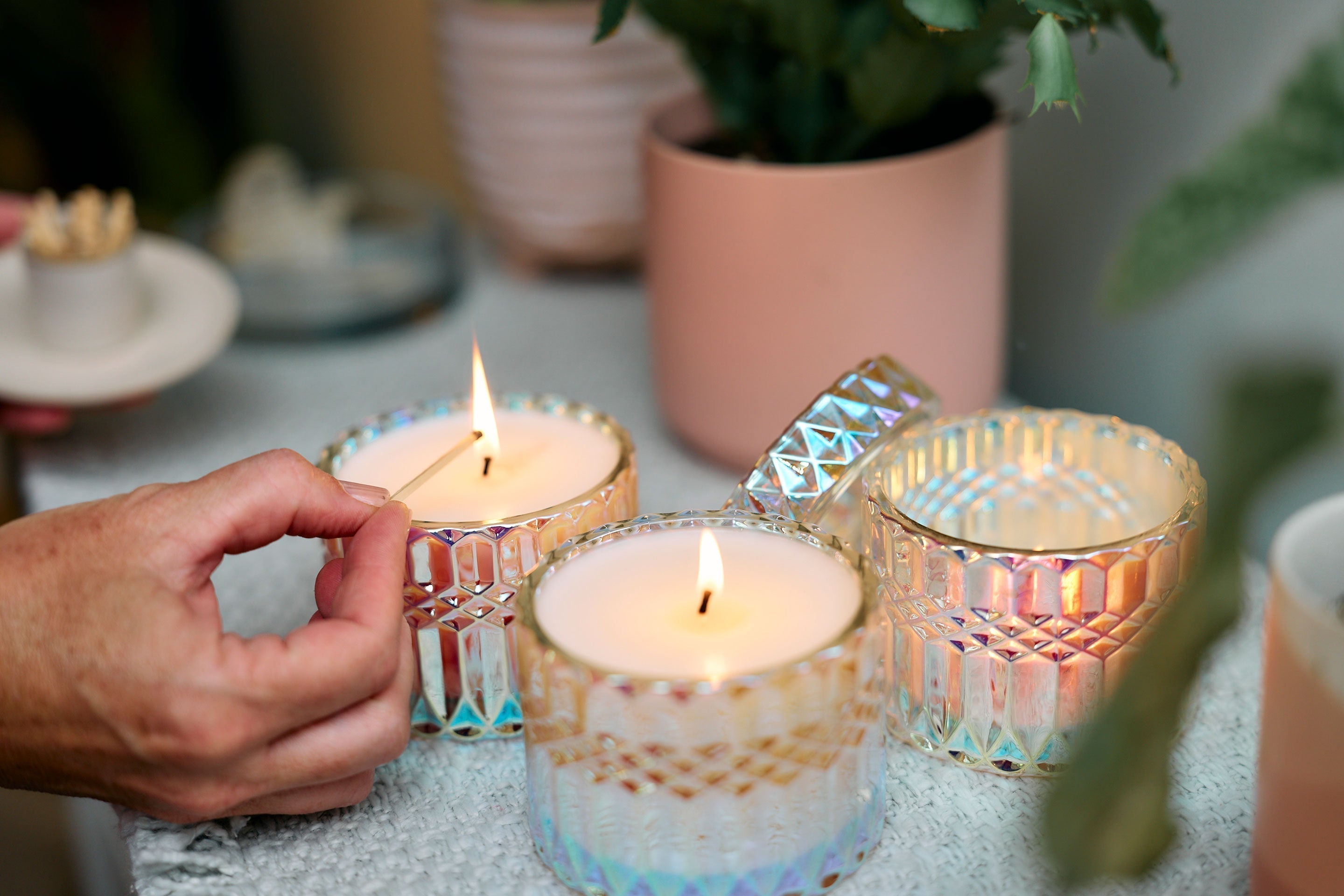
Apricot-coconut-soy SunCatcher, bright and uplifting in iridescent glass. SunCatcher also features natural botanical fragrance, Naturally Scented, Nothing Synthetic, for airy kitchens and open-window days.
-
Heirloom Aromatherapy beeswax pillars, scented with pure essential oils. Thoughtful for meditation and quiet routines.
Want to browse the full range, from pillars and tapers to container jars, start with our all candles page to see what fits your home and season.

Healthy candle checklist
Use this quick check before you light up:
-
100% cotton wick, no metal core
-
Wax you recognize (beeswax, soy, or apricot-coconut-soy)
-
Clear fragrance source (pure essential oils for beeswax aromatherapy pillars, or natural botanical fragrance in plant-based wax)
-
Wick trimmed to about 1/4 inch before each burn
-
Sturdy, heat-safe holder or plate, draft-free area
-
Gentle ventilation in small or AC-closed rooms
Simple burn habits that make a big difference
-
Trim before every burn. About 1/4 inch helps keep the flame calm and soot low.
-
First burn matters. Aim for a full melt pool across the top to help prevent tunneling. As a general guide, plan about 1 hour per inch of diameter for the first session.
-
Give candles space. Keep flames a few inches apart and away from curtains, greenery, and breezy vents.
-
Extinguish gently. Dip the wick into the melt pool and straighten it to reduce after-smoke. Allow vessels to cool before moving.
FAQ
-
What is the healthiest candle to burn at home? Unscented 100% beeswax with a cotton wick is a top choice for low soot and a subtle natural aroma. Properly formulated plant-based options can also perform cleanly.
-
Which candles are considered safer for lungs? Candles with clean-burning waxes like beeswax or quality plant-based blends, plus 100% cotton wicks, typically produce less soot when used with good burn habits and light ventilation.
-
What wax is healthiest? 100% beeswax is often preferred for a steady, low-soot burn and long life. Apricot-coconut-soy and soy can be excellent when paired with the right wick.
-
What should I avoid? Skip candles with paraffin, metal-core wicks, unclear ingredients, or heavy synthetic fragrance in small, closed rooms. Avoid burning any candle with an overlong wick.
A gentle next step
Ready to simplify your candle shelf, start with our Beeswax Basics for unscented pillars, tapers, votives, and tealights. Curious about how we formulate, learn about our ingredients and collections. For seasonal tips and early access to new drops, join our newsletter community.
Helpful links:
-
Explore candles you can feel good about in our main collection at Sunbeam Candles.
-
Stock your table with beeswax pillars, classic votives, and tealights in our Beeswax Basics, including unscented options for dining and sensitive noses.
-
Prefer small-format lights, browse our votives and tealights for flexible, low-profile glow.


Leave a comment
This site is protected by hCaptcha and the hCaptcha Privacy Policy and Terms of Service apply.